Operating Systems

All-Radio 4.27 Portable Can't Be Removed? Then Your PC Is Severely Infected (bleepingcomputer.com) 247

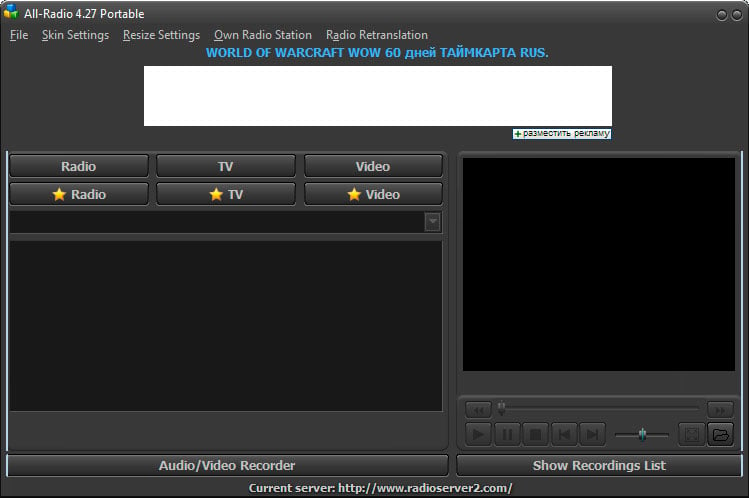
CaptainDork shares a report from Bleeping Computer: Starting yesterday, there have been numerous reports of people's Windows computers being infected with something called "All-Radio 4.27 Portable." After researching this heavily today, it has been determined that seeing this program is a symptom of a much bigger problem on your computer. If your computer is suddenly displaying the above program, then your computer is infected with malware that installs rootkits, miners, information-stealing Trojans, and a program that is using your computer to send send out spam.

Unfortunately, while some security programs are able to remove parts of the infection, the rootkit component needs manual removal help. Due to this, if you are infected with this malware, I strongly suggest that you create a malware removal help topic in our Virus Removal forum in order to receive one-on-one help in cleaning your computer. Some of the VirusTotal scans associated with this infection have also indicated that an information stealing Trojan could have been installed by this malware bundle as well. Therefore, it is strongly suggested that you change your passwords using a clean machine if you had logged into any accounts while infected.
6/29/18: The story has been updated to specify that this malware campaign is targeting Windows computers.
Security

GitHub Gentoo Organization Hacked (gentoo.org) 41

Longtime Slashdot reader Chutzpah shares a report from Gentoo Linux, a Linux distribution built using the Portage package management system: June 28 at approximately 20:20 UTC unknown individuals have gained control of the Github Gentoo organization, and modified the content of repositories as well as pages there. We are still working to determine the exact extent and to regain control of the organization and its repositories. All Gentoo code hosted on GitHub should for the moment be considered compromised.

This does NOT affect any code hosted on the Gentoo infrastructure. Since the master Gentoo ebuild repository is hosted on our own infrastructure and since Github is only a mirror for it, you are fine as long as you are using rsync or webrsync from gentoo.org.
Update 6/29/18: Gentoo has regained control of the Gentoo GitHub Organization and is working on a procedure for resolution. You can view the update status here.
Privacy

Marketing Firm Exactis Leaked a Personal Info Database With 340 Million Records (wired.com) 77

You've probably never heard of the marketing and data aggregation firm Exactis. But it may well have heard of you. And now there's also a good chance that whatever information the company has about you, it recently leaked onto the public internet, available to any hacker who simply knew where to look. From a report: Earlier this month, security researcher Vinny Troia discovered that Exactis, a data broker based in Palm Coast, Florida, had exposed a database that contained close to 340 million individual records on a publicly accessible server. The haul comprises close to 2 terabytes of data that appears to include personal information on hundreds of millions of American adults, as well as millions of businesses. While the precise number of individuals included in the data isn't clear -- and the leak doesn't seem to contain credit card information or Social Security numbers -- it does go into minute detail for each individual listed, including phone numbers, home addresses, email addresses, and other highly personal characteristics for every name. The categories range from interests and habits to the number, age, and gender of the person's children.

"It seems like this is a database with pretty much every US citizen in it," says Troia, who is the founder of his own New York-based security company, Night Lion Security. Troia notes that almost every person he's searched for in the database, he's found. And when WIRED asked him to find records for a list of 10 specific people in the database, he very quickly found six of them. "I don't know where the data is coming from, but it's one of the most comprehensive collections I've ever seen," he says.

Android

Every Android Device Launched Since 2012 Impacted By RAMpage Vulnerability (bleepingcomputer.com) 83

Almost all Android devices released since 2012 are vulnerable to RAMpage bug, an international team of academics has revealed today. From a report: The vulnerability, tracked as CVE-2018-9442, is a variation of the Rowhammer attack. Rowhammer is a hardware bug in modern memory cards. A few years back researchers discovered that when someone would send repeated write/read requests to the same row of memory cells, the write/read operations would create an electrical field that would alter data stored on nearby memory. In the following years, researchers discovered that Rowhammer-like attacks affected personal computers, virtual machines, and Android devices. Through further researcher, they also found they could execute Rowhammer attacks via JavaScript code, GPU cards, and network packets.
Security

What's Up With ProtonMail Outages? (bleepingcomputer.com) 88

ProtonMail, a secure email service provider used by more than two million users and references of which has been made in shows like Mr. Robot, has been facing outages for the last two days as it fights numerous DDoS attacks. "The attacks went on for several hours, although the outages were far more brief, usually several minutes at a time with the longest outage on the order of 10 minutes," a ProtonMail spokesperson told BleepingComputer, adding that it has tracked the attack to a group that claims to have ties to Russia. But things are more complicated than that, and it appears ProtonMail users, who are already annoyed at the frequent outages over the last few days, are up for more such downtimes in the coming days. BleepingComputer: But in reality, the DDoS attacks have no ties to Russia, weren't even planned to in the first place, and the group behind the attacks denounced being Russian, to begin with. Responsible for the attacks is a hacker group named Apophis Squad. In a private conversation with Bleeping Computer today, one of the group's members detailed yesterday's chain of events. The Apophis member says they targeted ProtonMail at random while testing a beta version of a DDoS booter service the group is developing and preparing to launch.

The group didn't cite any reason outside "testing" for the initial and uncalled for attack on ProtonMail, which they later revealed to have been a 200 Gbps SSDP flood, according to one of their tweets. "After we sent the first attack, we downed it for 60 seconds," an Apophis Squad member told us. He said the group didn't intend to harass ProtonMail all day yesterday or today but decided to do so after ProtonMail's CTO, Bart Butler, responded to one of their tweets calling the group "clowns."

This was a questionable response on the part of the ProtonMail CTO, as it set the hackers against his company even more. "So we then downed them for a few hours," the Apophis Squad said. Subsequent attacks included a whopping TCP-SYN flood estimated at 500 Gbps, as claimed by the group.

Privacy

Home Security Camera Sends Video To Wrong User (bbc.com) 91

An anonymous reader quotes a report from the BBC: A leading security camera-maker has sent footage from inside a family's home to the wrong person's app. Swann Security has blamed a factory error for the data breach -- which was brought to its attention by the BBC -- and said it was a "one-off" incident. The BBC first learned of the problem on Saturday, when a member of its staff began receiving motion-triggered video clips from an unknown family's kitchen. Until that point, Louisa Lewis had only received footage from her own Swann security camera, which she had been using since December. The development coincided with Ms Lewis's camera running out of battery power and requiring a recharge. A Swann spokeswoman said that "human error" had caused two cameras to be manufactured that shared the same "bank-grade security key -- which secures all communications with its owner." "This occurred after the [family] connected the duplicate camera to their network and ignored the warning prompt that notified: 'Camera is already paired to an account' and left the camera running," she added.

Slashdot Top Deals